

Introduction
The Hydraulic Backpack-type Home Elevator Cost is an important consideration for homeowners, villa owners, architects, contractors, and distributors planning a residential vertical transportation project. Unlike purchasing a simple household appliance, the total cost of a home elevator depends on the complete project configuration, including the elevator equipment, hydraulic drive system, cabin, doors, structural support, electrical system, installation work, transportation, commissioning, and required safety features.
A hydraulic backpack-type home elevator is designed to provide vertical transportation in private houses, villas, duplex homes, self-built residences, and other low-rise residential buildings. Its hydraulic drive system uses a hydraulic power unit and cylinder or jack arrangement to move the elevator cabin. The backpack-type structure can be configured around the available architectural space, which makes it attractive for projects where a conventional elevator arrangement may not be suitable.
When comparing the Hydraulic Backpack-type Home Elevator Cost, buyers should avoid looking only at the initial equipment quotation. Two elevators with similar cabin dimensions can have significantly different total project costs because of differences in travel height, number of stops, structural preparation, door configuration, finishing materials, installation conditions, and local requirements.
For example, a new villa designed with an elevator shaft from the beginning may require less structural modification than an existing house that needs an elevator added after construction. Similarly, an indoor elevator may have different construction requirements from an outdoor elevator exposed to rain, humidity, temperature changes, and other environmental conditions.
A professional manufacturer normally evaluates the project before providing a final quotation. This approach allows the elevator configuration, hydraulic system, structural components, safety devices, and installation method to be matched with the actual building.
What Is a Hydraulic Backpack-type Home Elevator?
A hydraulic backpack-type home elevator is a Residential Elevator that combines hydraulic lifting technology with a compact backpack-style structural arrangement.
The hydraulic system generally includes a reservoir, pump, motor, valves, cylinder or jack, piping, and control components. Hydraulic fluid is pressurized by the pump and directed into the cylinder to generate the force required for elevator movement.
The basic operating principle is straightforward:
The motor drives the hydraulic pump.
The pump pressurizes hydraulic fluid.
The control valves direct fluid toward the cylinder.
The cylinder generates lifting movement.
The elevator cabin travels along its guide system.
The control system regulates stopping and leveling.
During downward movement, the hydraulic system controls the release of fluid.
The actual configuration depends on the elevator design.
The backpack-type structure places the lifting mechanism and supporting components in a compact arrangement around the cabin. This can provide flexibility when designing elevators for existing residential architecture.
Hydraulic Backpack-type Home Elevator Cost: Main Components
The total cost can be divided into several categories.
The basic equipment package normally represents the core portion of the quotation.
It may include:
Elevator cabin
Supporting frame
Guide rails
Hydraulic cylinder
Hydraulic power unit
Hydraulic valves
Controller
Electrical components
Landing doors
Cabin doors or gates
Control buttons
Safety devices
Lighting
Emergency equipment
The exact contents of an equipment package should be clearly stated in the quotation.
Installation costs depend heavily on the site.
Important factors include:
Building structure
Number of floors
Travel height
Existing shaft conditions
Required structural reinforcement
Door openings
Electrical work
Foundation requirements
Outdoor enclosure
Accessibility of the construction site
An elevator that can be installed in a prepared shaft may require less construction work than a project where the entire supporting structure must be constructed.
For some projects, the elevator itself is only part of the overall investment.
Additional construction may include:
Elevator shaft
Steel structure
Concrete foundation
Wall reinforcement
Landing openings
Door frames
Exterior enclosure
Weather protection
Drainage
Waterproofing
These costs should be separated from the elevator equipment quotation so that buyers can understand the actual project budget.
Transportation depends on:
Shipping distance
Package dimensions
Total equipment weight
Port or warehouse requirements
Import procedures
Local delivery
Special handling requirements
For international projects, buyers should determine whether the quoted price includes transportation, customs-related charges, or only factory delivery.
After installation, the elevator must be tested and commissioned.
Commissioning may include:
Hydraulic pressure testing
Door testing
Control system testing
Limit switch testing
Emergency operation testing
Leveling adjustment
Safety device testing
Trial operation
The final requirements depend on the project location and applicable standards.
Hydraulic Backpack-type Home Elevator Cost Factors
There is no universal price for every hydraulic backpack-type home elevator because residential projects vary considerably.
The number of floors directly influences the design of the elevator.
Additional floors can affect:
Travel distance
Guide rail length
Hydraulic cylinder requirements
Number of landing doors
Electrical wiring
Installation labor
Structural requirements
Commissioning time
A two-stop residential elevator and a four-stop residential elevator should therefore not be expected to have the same project cost.
Travel height is another major factor.
The manufacturer needs to know the distance between the lowest and highest landing before selecting the appropriate hydraulic configuration.
Higher travel distances can require different cylinder dimensions, guide components, structural arrangements, and control configurations.
The required load capacity influences the size and configuration of the elevator.
Common residential requirements may include:
Two-person applications
Three-person applications
Four-person applications
Larger residential cabins
The final rated load must be determined according to the elevator design and applicable regulations.
A larger cabin normally requires more structural materials and may require a larger hydraulic system.
Cabin size also affects:
Frame dimensions
Door dimensions
Guide system
Cabin weight
Hydraulic capacity
Building space
For a small private residence, a compact cabin may be sufficient. A luxury villa may require a larger cabin for passengers, luggage, furniture, or accessibility requirements.
The number and configuration of landing doors also influence cost.
A home elevator can be designed with different door arrangements depending on the building layout.
Possible configurations include:
Single entrance
Opposite entrance
Multiple landing entrances
Manual doors
Automatic doors
The appropriate configuration should be determined during the design stage.
Indoor vs Outdoor Hydraulic Backpack-type Home Elevator Cost
Installation environment can significantly affect the total project budget.
Indoor installation can provide protection from weather and may simplify certain structural and finishing requirements.
Potential advantages include:
Better environmental protection
Easier integration with interior architecture
Reduced exposure to rain
Lower corrosion exposure
More stable operating environment
However, an indoor installation may require modifications to the existing floor structure or staircase area.
An outdoor hydraulic backpack-type home elevator can be useful when there is insufficient interior space.
Possible installation locations include:
Exterior walls
Balconies
Terraces
Garages
Garden entrances
Side extensions
Outdoor installations require additional consideration of:
Rain protection
Waterproofing
Drainage
Corrosion resistance
Wind conditions
Temperature
Exterior enclosure
Electrical protection
Therefore, an outdoor project may have additional structural and protective costs.
Hydraulic Backpack-type Home Elevator Parameters
The final parameters should be customized according to the project. A typical specification framework includes:
Product Type | Hydraulic Backpack-type Home Elevator |
Application | Residential |
Drive System | Hydraulic |
Installation | Indoor or Outdoor |
Rated Load | Project-specific |
Number of Floors | Project-specific |
Number of Stops | Project-specific |
Travel Height | Project-specific |
Cabin Size | Customized |
Door Configuration | Customized |
Cabin Material | Stainless Steel / Glass / Customized |
Structure | Backpack-type |
Control System | Residential Elevator Control System |
Power Supply | According to Local Electrical Standard |
Safety System | Multiple Safety Protection Functions |
Emergency Operation | Configuration Dependent |
Finish | Customized |
Installation | Project-specific |
These parameters are not universal specifications. The manufacturer should confirm the final design after reviewing the building conditions.
Features of a Hydraulic Backpack-type Home Elevator
The backpack-type configuration can help integrate the elevator into residential spaces where a conventional arrangement may be difficult.
Hydraulic technology provides the lifting force required to move the cabin. A hydraulic system typically consists of a tank, pump, motor, valves, cylinder, and related control components.
The elevator can be customized according to:
Cabin dimensions
Load capacity
Travel height
Door arrangement
Number of floors
Cabin materials
Exterior finish
Control system
Safety configuration
Unlike heavy-duty industrial elevators, home elevators can be designed to complement residential interiors and exteriors.
Possible finishes include:
Stainless steel
Glass
Painted steel
Decorative panels
Wood-style finishes
Customized ceiling
LED lighting
Depending on the design, the system can be configured for indoor or outdoor installation.
Advantages of a Hydraulic Backpack-type Home Elevator
The compact structural arrangement can be useful for houses where floor space is limited.
A customized system can be designed around existing building conditions.
This can make hydraulic backpack-type elevators worth considering for:
Existing villas
Self-built houses
Duplex renovations
Multi-story homes
Accessibility upgrades
The elevator can be positioned near:
Staircases
Balconies
Exterior walls
Entrances
Garages
Existing vertical openings
A properly designed hydraulic system can provide controlled upward and downward movement.
Homeowners can select finishes and cabin materials that match the architectural style of the residence.
How to Calculate the Hydraulic Backpack-type Home Elevator Cost
A useful approach is to divide the total project into several categories.
Elevator Equipment + Installation + Structural Work + Transportation + Electrical Work + Commissioning + Optional Customization + Local Fees
For example, a buyer requesting a basic indoor elevator may have relatively simple structural requirements.
Another buyer may request:
Four floors
Large cabin
Automatic doors
Glass enclosure
Premium stainless steel
Outdoor installation
Customized structure
Additional safety equipment
The second project will naturally have a different total cost.
This is why an online price should normally be treated as a preliminary reference rather than a final quotation.
What Information Should Be Provided for a Price Quote?
To receive an accurate Hydraulic Backpack-type Home Elevator Cost, buyers should provide as much project information as possible.
Provide:
Number of floors
Number of stops
Floor-to-floor height
Total travel height
Available elevator space
Installation location
Indoor or outdoor application
Provide:
Required load
Number of passengers
Cabin size
Door size
Door type
Door opening direction
Preferred cabin material
Preferred finish
Required speed
Where possible, provide:
Floor plans
Elevator location drawings
Building photos
Section drawings
Available shaft dimensions
Structural information
The more accurate the information, the more accurately the factory can design the elevator and prepare a quotation.
Hydraulic Backpack-type Home Elevator Installation
Installation should be planned before the elevator is shipped.
The installer checks the building dimensions and structural conditions.
The factory confirms:
Cabin dimensions
Structural frame
Landing positions
Hydraulic system
Door configuration
Electrical requirements
The site may require:
Foundation preparation
Structural reinforcement
Door openings
Electrical wiring
Shaft construction
Steel frame installation
Outdoor enclosure
The supporting structure and guide components are installed.
The hydraulic power unit, cylinder, valves, hoses, and related components are installed.
The cabin and doors are installed and adjusted.
The controller, control panel, sensors, switches, emergency equipment, and other electrical components are connected.
The elevator is tested under the applicable commissioning procedure.
Hydraulic elevator standards address areas such as hydraulic components, valves, cylinders, piping, safety devices, emergency operation, and electrical systems. (ISO)
Safety Considerations and Cost
Safety should not be treated as an optional feature simply to reduce the purchase price.
Depending on the elevator design and applicable local requirements, the system may incorporate:
Door interlocks
Emergency stop
Emergency alarm
Emergency lowering
Hydraulic safety valves
Limit switches
Overload protection
Anti-creeping functions
Backup power
Safety sensors
Emergency lighting
For example, Singapore's current fixed-installation requirements include provisions concerning emergency operation of hydraulic drive systems, hydraulic valves, jacks, pipes, hoses, filters, oil levels, and electrical grounding.
The applicable regulations depend on the country, building type, elevator classification, and installation location. Buyers should confirm requirements with the local authority or qualified elevator professional before purchasing.
Hydraulic Backpack-type Home Elevator Cost in Different Project Types
A small house with two or three stops may require a compact configuration.
The cost is influenced by:
Small cabin
Short travel distance
Simple finishes
Limited structural modification
A villa may require:
Multiple stops
Larger cabin
Premium materials
Automatic doors
Customized finishes
More extensive structural integration
An existing house can require additional construction work.
Possible additional expenses include:
Floor openings
Wall modification
Structural reinforcement
Electrical renovation
Exterior structure
An outdoor elevator may require:
Weatherproof enclosure
Corrosion-resistant components
Waterproofing
Drainage
Exterior decoration
Additional structural support
Hydraulic Backpack-type Home Elevator Maintenance Cost
The purchase price is not the only cost to consider.
Long-term expenses may include:
Routine inspection
Hydraulic oil inspection
Hydraulic filter maintenance
Door adjustment
Electrical inspection
Safety device testing
Replacement of worn components
Hydraulic hose inspection
Valve maintenance
A residential elevator manufacturer's maintenance documentation, for example, may specify periodic hydraulic-fluid service and scheduled replacement of safety-critical hydraulic components.
Maintenance intervals should always follow the actual manufacturer's recommendations and local requirements.
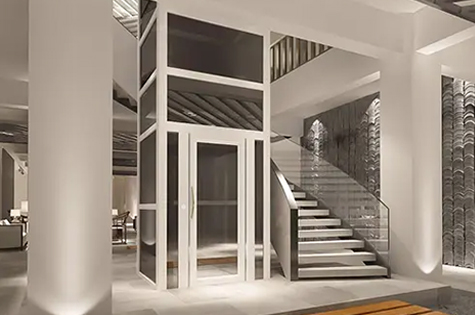
How to Reduce Total Project Cost
Reducing cost does not necessarily mean choosing the cheapest elevator.
Accurate measurements reduce the possibility of redesign and additional construction.
Avoid specifying a cabin larger than necessary if the building has limited space.
Stainless steel and glass are popular options, but decorative materials can significantly change the project budget.
Completing foundation, electrical work, shaft construction, and landing openings before installation can improve installation efficiency.
Direct factory communication can make it easier to discuss customization, technical requirements, spare parts, and installation support.
Do not compare only the equipment price.
Check whether each quotation includes:
Hydraulic system
Cabin
Doors
Controller
Safety devices
Structural frame
Installation
Transportation
Commissioning
Warranty
Spare parts
Hydraulic Backpack-type Home Elevator Cost vs Traditional Elevator Cost
When comparing elevator systems, the purchase price alone does not provide a complete picture.
A traditional traction elevator may involve different requirements for:
Machine arrangement
Shaft dimensions
Counterweight
Structural support
Electrical equipment
Installation
A hydraulic elevator has a different mechanical configuration and may be appropriate for certain low-rise residential applications.
The appropriate choice depends on:
Number of floors
Travel height
Available space
Building structure
Required speed
Usage frequency
Maintenance conditions
Local standards
Project budget
Therefore, buyers should compare complete technical solutions rather than only the initial equipment price.
Applications of Hydraulic Backpack-type Home Elevators
Hydraulic backpack-type elevators can connect multiple floors in large residential villas.
Customized dimensions can help integrate the elevator into individually designed houses.
A compact elevator can provide vertical transportation between residential levels.
A home elevator can reduce dependence on stairs and make movement between floors more convenient.
The system can be considered where an existing home needs additional vertical transportation.
Outdoor configurations can connect balconies, terraces, garages, and other levels where indoor installation is difficult.
How to Choose a Hydraulic Backpack-type Home Elevator Supplier
Price should be only one part of the purchasing decision.
Check whether the supplier actually manufactures the elevator or mainly acts as a trading intermediary.
The manufacturer should be able to review drawings and recommend an appropriate configuration.
Ask whether the factory can customize dimensions, cabin design, doors, finishes, and structural arrangements.
Important components include:
Hydraulic pump
Motor
Cylinder
Valves
Controller
Safety devices
Door system
Electrical components
Ask what factory testing procedures are performed before shipment.
Confirm whether the supplier provides:
Installation drawings
Technical manuals
Remote support
Commissioning instructions
On-site support if available
Confirm spare-parts availability, warranty conditions, maintenance requirements, and technical support.
Frequently Asked Questions
There is no single universal price. The final cost depends on the number of floors, travel height, rated load, cabin dimensions, door configuration, materials, installation conditions, structural work, transportation, and local requirements.
Depending on the supplier, the basic quotation may include the cabin, hydraulic system, controller, doors, guide system, structural components, and safety devices. Installation, transportation, civil construction, and customization may be quoted separately.
Always request a detailed quotation showing included and excluded items.
Yes. Hydraulic home elevators can be designed for villas and other low-rise residential applications. The final configuration should be based on building conditions and applicable regulations.
Depending on the design, yes. Outdoor installations need appropriate protection against rain, moisture, corrosion, temperature changes, and other environmental conditions.
The requirement depends on the specific hydraulic configuration. Some residential hydraulic systems use a compact power-unit arrangement, but the final requirements should be confirmed by the manufacturer.
Yes. Customization may include cabin size, load capacity, travel height, door configuration, materials, finishes, control systems, and structural dimensions.
Major factors include travel height, number of stops, cabin size, load capacity, installation conditions, structural work, door configuration, materials, and customization.
It can. Existing buildings may require structural modifications, new openings, reinforcement, electrical work, or additional construction. The actual cost depends on the building.
A properly designed home elevator can provide convenient vertical transportation and reduce the need to use stairs. Accessibility-related design should be discussed with the manufacturer during the planning stage.
Maintenance requirements depend on the elevator design, usage frequency, environment, and manufacturer instructions. Hydraulic fluid, valves, hoses, electrical systems, doors, and safety devices should be inspected according to the recommended schedule.
It can be suitable for selected low-rise residential applications, particularly where a customized compact configuration is appropriate. The building should be assessed before selecting the drive system.
An online estimate can provide a preliminary reference, but an exact project quotation normally requires building dimensions and elevator specifications.
Provide:
Number of floors
Number of stops
Floor height
Total travel height
Required load
Cabin dimensions
Door dimensions
Installation location
Indoor or outdoor requirement
Building drawings
Site photos
Preferred materials
Component selection, engineering requirements, safety configuration, testing, and customization can affect the total cost. Buyers should compare technical specifications rather than using price alone as the comparison method.
Applicable standards vary by jurisdiction. International standards and national regulations address elevator design, installation, operation, maintenance, and safety. ISO documentation specifically addresses hydraulic lift safety requirements, while local standards may impose additional requirements.
Equipment cost refers to the elevator system supplied by the manufacturer. Total project cost may additionally include installation, construction, transportation, electrical work, commissioning, permits, inspections, and customization.
Depending on the design, glass can be incorporated into the cabin or enclosure. The selected glass and installation method should meet the applicable safety requirements.
Emergency operation depends on the specific system. Hydraulic lift installations can incorporate emergency lowering or backup power functions. Applicable local requirements should be confirmed during design. Singapore's requirements, for example, address emergency operation of hydraulic drive systems and emergency power functions.
Service life depends on manufacturing quality, component selection, installation, operating frequency, environment, maintenance, and replacement of wear components. A regular professional maintenance program is important for long-term operation.
The best approach is to provide the manufacturer with the building dimensions, number of floors, travel height, required load, cabin size, door configuration, installation environment, and preferred materials. The factory can then prepare a project-specific technical proposal and quotation.
Conclusion
The Hydraulic Backpack-type Home Elevator Cost should be evaluated as a complete residential elevator project rather than as a simple equipment purchase. The final budget can be influenced by the hydraulic drive system, cabin size, load capacity, number of floors, travel height, doors, materials, structural requirements, installation conditions, transportation, commissioning, and local regulations.
The backpack-type configuration can offer flexibility for villas, self-built houses, duplex homes, renovated residences, and selected outdoor applications. Its compact arrangement allows manufacturers to develop customized solutions around different architectural conditions.
For homeowners and contractors, the most effective way to control project costs is to define the requirements before requesting quotations. Accurate building measurements, clear cabin dimensions, confirmed travel height, appropriate load capacity, and a complete list of required features can reduce design changes and unexpected construction expenses.
When comparing suppliers, buyers should request a detailed quotation rather than comparing a single headline price. The quotation should clearly identify equipment, hydraulic components, cabin, doors, safety devices, installation, transportation, commissioning, warranty, and other project expenses.
Most importantly, cost should be evaluated together with engineering quality, safety, component selection, installation capability, technical support, and long-term maintenance. A properly specified Hydraulic Backpack-type Home Elevator can provide a practical vertical transportation solution while being customized to the space, appearance, and functional requirements of a modern residential property.
Gumagamit ang website na ito ng cookies upang matiyak na makukuha mo ang pinakamahusay na karanasan sa aming website.
 English
 ไทย
ไทย Indonesia
 Tiếng Việt



 Telepono