

Introduction
The Traction Gantry Home Elevator Price is an important consideration for homeowners, villa developers, architects, contractors, and elevator distributors planning a residential vertical transportation project. A traction Gantry Home Elevator combines a traction drive system with a gantry-style structural arrangement to provide vertical transportation for villas, private residences, duplex houses, multi-level homes, and other residential buildings.
Unlike commercial passenger elevators designed primarily for high-rise buildings and heavy traffic, a home elevator is generally designed around residential requirements such as compact installation space, comfortable operation, quiet running, attractive appearance, accessibility, and flexible customization.
The final Traction Gantry Home Elevator Price is not determined by one specification alone. Elevator capacity, travel height, number of floors, speed, cabin dimensions, door configuration, drive system, structural materials, control system, installation conditions, safety configuration, and customization requirements can all affect the overall project cost.
For this reason, comparing only the basic equipment price may not provide an accurate picture of the total investment. A proper quotation should consider the complete elevator system, installation requirements, structural conditions, transportation, commissioning, and optional features.
This guide provides a detailed overview of traction gantry home elevator pricing factors, technical parameters, structural features, advantages, applications, installation requirements, operation, maintenance, and frequently asked questions.
What Is a Traction Gantry Home Elevator?
A traction gantry home elevator is a Residential Elevator that uses a traction mechanism to move the elevator cabin vertically. The gantry structure provides the supporting framework for the elevator system and can be configured according to the available residential space.
The traction system typically uses a motor, traction sheave, ropes or belts, counterweight arrangement, guide rails, and control system to move the elevator cabin.
Depending on the design, a traction gantry home elevator can be installed in:
Villas
Duplex houses
Self-built houses
Multi-story residences
Private residential buildings
Renovated homes
Small residential buildings
Indoor or outdoor residential spaces
The system can be designed with different capacities, speeds, cabin sizes, door types, finishes, and control configurations.
For residential projects where space is limited, a compact gantry arrangement can help integrate the elevator into an existing building layout without requiring the same type of infrastructure as a large commercial elevator.
Traction Gantry Home Elevator Price Overview
There is no single universal price for a traction gantry home elevator.
A realistic quotation depends on the specific project.
The most important price factors include:
Elevator capacity
Number of floors
Travel height
Rated speed
Cabin dimensions
Door configuration
Shaft or enclosure requirements
Gantry structure
Traction machine
Control system
Safety devices
Cabin materials
Installation conditions
Customization
Transportation
Installation and commissioning
A basic residential elevator configuration may cost significantly less than a highly customized Villa Elevator with premium cabin finishes, panoramic glass, complex installation requirements, and advanced control functions.
Therefore, buyers should request a project-specific quotation based on complete technical requirements rather than comparing only a basic equipment price.
Main Factors Affecting Traction Gantry Home Elevator Price
Rated load is one of the primary factors affecting elevator configuration.
Residential Traction Elevators may be designed for different passenger capacities depending on the building and application.
Common considerations include:
2-person configurations
3-person configurations
4-person configurations
Larger residential configurations
A higher rated load may require stronger structural components, a larger cabin, different traction equipment, and additional safety considerations.
The number of floors directly affects the required travel distance and guide rail length.
A two-floor residential elevator generally requires less structural material and installation work than an elevator serving four, five, or more floors.
The number of stops also influences:
Door quantity
Control configuration
Guide rail length
Electrical wiring
Installation labor
Commissioning requirements
Travel height refers to the vertical distance the elevator travels between the lowest and highest stops.
A greater travel height can increase material requirements and installation complexity.
Residential elevators generally operate at speeds appropriate for home use rather than commercial high-speed applications.
Higher speed can influence:
Traction machine selection
Controller configuration
Safety system
Guide rail requirements
Cabin movement characteristics
The appropriate speed should be selected according to travel height, passenger requirements, and applicable regulations.
Cabin dimensions have a direct effect on equipment selection and overall project requirements.
A compact cabin may be appropriate for limited residential space, while a larger cabin may be preferred when wheelchair access, family use, or greater passenger capacity is required.
Door configuration can influence the total elevator price.
Options may include:
Manual doors
Automatic doors
Single entrance
Through-opening
Side-opening
Center-opening
The appropriate configuration depends on the building layout and accessibility requirements.
Cabin finishes can range from practical standard materials to premium customized designs.
Potential options include:
Stainless steel
Aluminum
Glass
Decorative panels
Wood-effect finishes
Customized interior materials
Premium materials and customized finishes can increase the overall equipment cost.
A panoramic traction gantry home elevator can use glass panels to provide greater visibility.
Panoramic designs may be particularly suitable for villas, gardens, balconies, terraces, and scenic residential spaces.
The additional glass structure, safety requirements, and customized enclosure may affect the final price.
Installation conditions can significantly affect the total project cost.
For example, a new villa designed with an elevator shaft from the beginning may have simpler installation requirements than an existing house requiring structural modification.
Important factors include:
Existing building structure
Available installation space
Foundation
Shaft condition
Floor openings
Electrical access
Door opening conditions
Transportation access
Customized elevators generally require additional engineering and manufacturing work.
Customization may include:
Special dimensions
Custom cabin finishes
Special door configurations
Outdoor installation
Panoramic enclosure
Customized gantry structure
Special control functions
Typical Technical Parameters
The exact parameters should be confirmed with the manufacturer.
Product Type | Traction Gantry Home Elevator |
Application | Residential / Villa |
Drive Type | Traction |
Rated Load | Customized |
Passenger Capacity | Customized |
Rated Speed | Customized |
Floors | 2–6 or Project-Specific |
Travel Height | Customized |
Cabin Size | Customized |
Door Type | Manual or Automatic |
Door Configuration | Single / Through / Customized |
Installation | Indoor or Outdoor Depending on Design |
Structure | Gantry-Type Supporting Structure |
Control | Microcomputer-Based Elevator Control |
Safety | Multiple Safety Protection Systems |
Cabin Finish | Stainless Steel / Glass / Customized |
Power Supply | According to Local Electrical Standard |
Installation | Professional Installation Recommended |
These figures are examples of common project considerations rather than universal specifications. Final parameters must be determined by engineering requirements and local regulations.
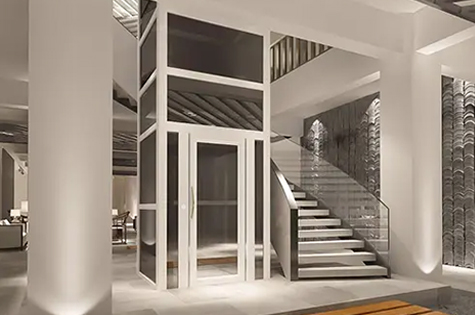
Main Features of a Traction Gantry Home Elevator
The system can be designed for residential buildings where installation space is limited.
The traction system provides controlled vertical movement through a motor-driven traction mechanism.
The gantry structure provides a dedicated supporting framework for the elevator system.
Depending on the product configuration, installation may be possible in indoor, outdoor, balcony, courtyard, or other residential locations.
Homeowners can select different cabin dimensions, finishes, lighting, doors, and control configurations.
A properly configured traction system can provide controlled acceleration, deceleration, and comfortable passenger movement.
The elevator can be designed to integrate with modern villa architecture and interior decoration.
Advantages of a Traction Gantry Home Elevator
Residential buildings often have limited space.
A compact traction gantry configuration can help integrate vertical transportation without requiring a large commercial elevator installation.
A home elevator can connect multiple floors and reduce the need to use stairs.
This can be useful for families with children, older residents, or people carrying household items between floors.
The elevator can be integrated into different building layouts.
Possible installation locations include:
Stairwell areas
Building corners
Exterior walls
Balconies
Courtyards
Internal residential spaces
The feasibility of each location must be verified through structural and engineering assessment.
Traction technology can provide controlled and stable cabin movement when properly designed and commissioned.
A residential elevator can become part of the home's architectural design rather than being treated only as a functional machine.
The elevator can be adapted according to passenger capacity, dimensions, travel height, doors, materials, and building layout.
Traction Gantry Home Elevator Applications
Large villas often have multiple levels, making a home elevator a convenient vertical transportation solution.
A traction gantry elevator can be customized to complement villa architecture.
A duplex may have different floor levels that can be connected by a Compact Residential Elevator.
Self-built houses can integrate an elevator during the architectural design stage.
Early planning can make it easier to reserve suitable space for the elevator, doors, electrical systems, and structural supports.
A gantry-style elevator can potentially be added to an existing house when suitable installation space is available.
A structural assessment should be completed before installation.
Where indoor space is limited, an elevator may be installed externally.
Outdoor installations require appropriate protection against weather, water, temperature changes, and corrosion.
A residential elevator can connect different balcony or terrace levels when the building design allows it.
Panoramic or outdoor configurations may be suitable for villas with gardens or open residential areas.
Indoor vs Outdoor Traction Gantry Home Elevator
Indoor installation can provide protection from weather and may simplify environmental protection.
Potential installation locations include:
Staircase areas
Hallways
Atriums
Interior corners
Dedicated elevator spaces
Outdoor installation can be useful when internal space is insufficient.
The design should consider:
Rain protection
Drainage
Corrosion resistance
Temperature
Sunlight
Wind
Waterproofing
The electrical and control components should also be appropriately protected.

Installation Requirements
Accurate measurement should be completed before manufacturing.
Important dimensions include:
Available width
Available depth
Floor height
Door opening
Top clearance
Pit requirements
Installation access
Structural support locations
For an existing house, the building structure should be assessed before installation.
The supporting structure must be capable of handling the elevator loads.
The foundation or base structure should be designed according to the elevator system and installation location.
The required electrical supply should be confirmed before installation.
Electrical requirements depend on the traction machine, controller, lighting, door system, and other components.
Guide rails must be installed accurately to ensure stable cabin movement.
The gantry structure should be assembled and anchored according to the manufacturer's technical drawings.
The traction machine, traction sheave, ropes or belts, and related components should be installed and adjusted correctly.
The cabin is assembled and connected to the guide system.
Landing doors and cabin doors must be correctly aligned.
The controller, buttons, sensors, safety devices, door system, and emergency functions must be tested before operation.
How to Use a Traction Gantry Home Elevator
Before entering the elevator, confirm that the cabin is properly positioned at the landing.
Enter without exceeding the rated passenger load.
Use the control panel to select the desired floor.
Do not block the doors during opening or closing.
Avoid jumping, excessive movement, or damaging cabin components.
Children should use the elevator under appropriate supervision according to local safety requirements.
If an abnormal sound, unusual vibration, door problem, or other fault occurs, stop using the elevator and contact qualified maintenance personnel.
Never attempt to repair traction equipment, electrical controls, safety devices, or other technical components without proper qualifications.
Safety Features
A residential traction elevator should incorporate appropriate safety systems.
Depending on the specific design, safety features may include:
Overspeed protection
Emergency braking
Door interlocks
Limit switches
Emergency lighting
Emergency alarm
Backup lowering or emergency operation
Safety sensors
Overload protection
Controller fault protection
The exact safety configuration depends on the elevator design and applicable standards.
Safety components should be inspected and tested regularly.
Maintenance Guide
Regular maintenance is essential for safe and reliable operation.
Maintenance personnel should inspect:
Traction machine
Traction sheave
Ropes or belts
Bearings
Motor
Brake system
Guide rails should remain correctly aligned and securely fixed.
Door operation should be checked regularly.
Inspect:
Door rollers
Door tracks
Door sensors
Door locks
Door alignment
Safety devices should be tested according to the manufacturer's maintenance schedule and applicable regulations.
The cabin should be cleaned using materials appropriate for its interior finish.
Avoid excessive water around electrical components.
Outdoor elevators require additional inspection for:
Corrosion
Water penetration
Seal deterioration
Weather damage
Drainage
Electrical enclosure protection
How to Reduce the Total Traction Gantry Home Elevator Cost
Buyers can manage project costs by defining requirements before requesting quotations.
Avoid specifying a significantly larger capacity than the household actually requires.
A compact cabin can reduce structural and material requirements where accessibility and passenger requirements permit.
For new construction, integrating the elevator during architectural planning can reduce later structural modifications.
Premium decorative materials can increase the price. A practical stainless steel cabin may be sufficient for many residential applications.
When comparing suppliers, consider:
Elevator equipment
Gantry structure
Control system
Safety components
Doors
Installation
Commissioning
Transportation
Warranty
After-sales service
Comparing only the base machine price may not reveal the actual project cost.
What Should Be Included in a Traction Gantry Home Elevator Quotation?
A professional quotation should clearly identify the major components and services.
A quotation may include:
The traction machine, controller, guide rails, cabin, doors, and associated components.
The supporting structure and associated connection components.
Safety devices required by the selected elevator configuration.
Cabin dimensions, materials, flooring, ceiling, lighting, and control panel.
Door type, opening direction, number of stops, and door dimensions.
Installation labor, commissioning, testing, and technical support.
Packaging and transportation requirements should be identified separately where applicable.
Warranty terms, covered components, service conditions, and exclusions should be clearly stated.
Common Mistakes When Comparing Elevator Prices
A 250 kg elevator and a 400 kg elevator should not be compared simply by price.
Their equipment requirements may be different.
A low equipment price may not include installation, commissioning, or structural work.
More floors usually mean more landing doors and installation work.
Special cabin finishes, panoramic glass, outdoor structures, and unusual dimensions can increase cost.
Elevator regulations vary by market.
Local inspection, certification, electrical requirements, and building regulations may affect the total project.
Frequently Asked Questions About Traction Gantry Home Elevator Price
There is no single fixed price because the total cost depends on capacity, number of floors, travel height, cabin size, door configuration, traction equipment, gantry structure, installation conditions, customization, transportation, and local requirements.
A project-specific quotation is therefore more meaningful than a general price figure.
The major factors include elevator capacity, number of floors, travel height, cabin dimensions, door configuration, structural requirements, installation conditions, and customization.
Yes. It can be designed specifically for villa applications, including multi-level villas, duplex homes, and self-built houses.
Depending on the design, a traction gantry home elevator can be configured for outdoor installation. Outdoor projects require suitable waterproofing, corrosion protection, drainage, electrical protection, and weather-resistant materials.
Potentially. An existing building must first be evaluated for available space, structural capacity, access, foundation requirements, and local regulations.
The number of floors depends on the specific elevator design and project requirements. Residential traction elevators can be engineered for different numbers of stops and travel heights.
Some traction home elevator designs use compact machine arrangements and may not require a conventional separate machine room. The exact requirement depends on the product design.
Pit requirements depend on the elevator design. Some Residential Elevator Systems can be designed with reduced pit requirements, but the exact configuration should be confirmed with the manufacturer.
Yes. Cabin dimensions can often be customized within the limits of the traction system, structural arrangement, safety requirements, and available installation space.
Yes. Panoramic glass configurations are available for some residential designs.
Glass elevators can be particularly suitable for villas, balconies, gardens, terraces, and other architectural applications.
A residential elevator can improve convenient access between floors, particularly where stairs are difficult to use. Accessibility requirements should be incorporated into the cabin size, door opening, controls, handrails, and other features.
A properly designed and installed traction elevator can provide smooth residential operation. Actual noise levels depend on the motor, drive system, guide rails, cabin structure, installation quality, and building environment.
The required power supply depends on the traction machine, controller, door system, lighting, and local electrical standards. The manufacturer should provide the exact electrical requirements for the selected model.
Maintenance frequency depends on the elevator manufacturer, operating conditions, usage frequency, and local regulations. Regular professional inspection and maintenance are recommended.
Yes. Compact cabin dimensions and customized structural arrangements may be available for projects with limited space. A site survey should be completed before confirming the design.
The following information is useful:
Number of floors
Number of stops
Floor-to-floor height
Total travel height
Required capacity
Cabin dimensions
Door dimensions
Indoor or outdoor installation
Available shaft or installation space
Pit conditions
Top clearance
Preferred cabin materials
Power supply
Project location
Required certification
Providing complete information allows the manufacturer to prepare a more accurate quotation.
Conclusion
The Traction Gantry Home Elevator Price depends on the complete configuration rather than one standard equipment cost. Capacity, travel height, number of floors, cabin dimensions, doors, traction system, gantry structure, safety equipment, installation conditions, materials, and customization can all influence the final investment.
For villas, duplex homes, self-built houses, and other multi-level residences, a traction gantry home elevator can provide a practical solution for vertical transportation while allowing flexible architectural integration.
The best approach to purchasing a residential traction elevator is to define the project requirements first. Buyers should identify the number of floors, travel height, capacity, cabin dimensions, installation location, door configuration, structural conditions, and desired features before requesting quotations.
When comparing suppliers, the focus should not be limited to the initial equipment price. A complete evaluation should include the elevator system, gantry structure, safety configuration, installation, commissioning, transportation, warranty, technical support, and applicable local requirements.
By evaluating the complete project cost and technical configuration, homeowners, builders, architects, and distributors can select a traction gantry home elevator solution that matches the building's actual requirements and long-term operating needs.
Gumagamit ang website na ito ng cookies upang matiyak na makukuha mo ang pinakamahusay na karanasan sa aming website.
 English
 ไทย
ไทย Indonesia
 Tiếng Việt



 Telepono