

1. Introduction to Villa Traction Gantry Elevator
A Villa Traction Gantry Elevator is a Residential Elevator designed to provide convenient vertical transportation between floors in private villas, luxury houses, duplex residences, and multi-story homes. It combines an electric traction drive system with a supporting gantry structure to create a lifting solution that can be adapted to different residential layouts.
As modern residential architecture increasingly emphasizes accessibility, space efficiency, and personalized design, Villa Elevators have become an important consideration for homeowners, architects, property developers, and construction companies. A well-designed elevator can improve everyday convenience while supporting long-term residential usability.
Traditional elevator installations may require a dedicated shaft, a machine room, and substantial building preparation. Depending on the selected traction gantry model, an integrated supporting structure may offer greater flexibility when planning an elevator for a villa or renovating an existing house. However, the exact structural arrangement, pit requirements, overhead clearance, and enclosure requirements must be confirmed for the specific product.
The Villa Traction Gantry Elevator is suitable for projects where homeowners want to combine reliable transportation, a modern appearance, and customized installation options. Depending on the manufacturer's design, buyers may choose different cabin dimensions, door configurations, interior finishes, control systems, and rated loads.
Modern traction systems can incorporate variable-frequency drives, gearless traction machines, automatic doors, emergency communication, and other protective devices. These technologies help provide controlled movement, comfortable travel, and dependable daily operation when correctly designed, installed, and maintained.
For villa owners, the primary benefits include easier access between floors, improved convenience for older family members, reduced dependence on stairs, and more flexible residential planning. For commercial buyers, including elevator distributors and building contractors, the product offers opportunities for Customized Residential Elevator projects and factory-direct procurement.
Selecting the right Villa Traction Gantry Elevator requires careful consideration of the building structure, number of floors, passenger capacity, travel height, installation space, safety requirements, energy consumption, and maintenance support.
This guide explains the essential product characteristics and provides practical information to help buyers evaluate specifications, plan installation, operate the elevator safely, and maintain long-term performance.
A Villa Traction Gantry Elevator is an electric Residential Lifting system that uses a traction mechanism to move an elevator car between designated floors. A gantry-style structure supports the equipment according to the manufacturer's engineered configuration.
The traction mechanism generally includes a drive machine, a suspension arrangement, and associated mechanical components. The supporting structure provides the necessary framework for the guide rails and other equipment, subject to the specific elevator design.
Unlike a Hydraulic Villa Elevator, which uses a hydraulic power system to generate lifting force, a traction elevator relies on a traction drive and suspension arrangement. Its actual performance depends on the motor, control system, counterweight design, suspension components, and installation conditions.
A typical Villa Traction Gantry Elevator may include the following components:
Traction drive machine: Produces the force needed to move the elevator car.
Gantry supporting frame: Supports the equipment and relevant structural components.
Elevator car: Provides the enclosed or otherwise approved passenger space.
Guide rails: Direct the movement of the elevator car and any associated counterweight.
Suspension components: Transfer the lifting force through the manufacturer's approved ropes or other suspension system.
Controller: Coordinates floor selection, acceleration, deceleration, stopping, and safety-related functions.
Landing doors: Provide protected access at each designated floor.
Car door or gate: Protects the passenger entrance according to the approved design.
Braking and safety equipment: Helps control movement and respond to specified fault conditions.
Electrical equipment: Supplies power and coordinates the drive, lighting, controls, and auxiliary functions.
Emergency communication system: Allows passengers to request assistance when necessary.
The exact components and their arrangement vary by model. Buyers should request technical drawings and a detailed equipment list before confirming an order.
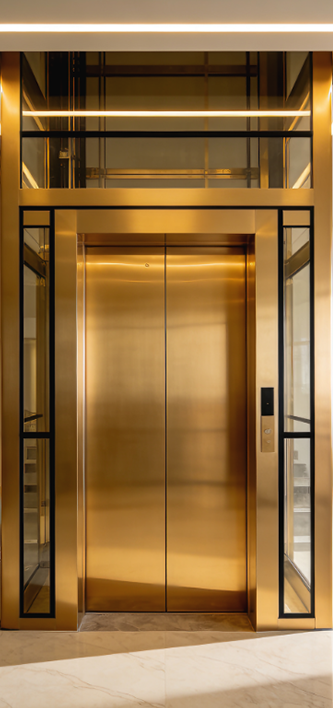
Technical specifications determine whether an elevator is suitable for a particular villa. The following table is a preliminary selection guide rather than a guaranteed specification for every Villa Traction Gantry Elevator.
Product Name | Villa Traction Gantry Elevator |
Elevator Type | Residential Electric Traction Elevator |
Drive System | Traction Drive |
Supporting Structure | Gantry-Style Frame, According to Model Design |
Application | Villas, Private Houses, Duplex Homes, Residential Renovations |
Number of Stops | Customized According to the Approved Model |
Rated Load | Selected According to Passenger and Accessibility Requirements |
Passenger Capacity | Determined by Rated Load and Cabin Dimensions |
Rated Speed | Confirmed in the Manufacturer's Technical Datasheet |
Travel Height | Customized According to Building Dimensions |
Cabin Size | Customized Within Approved Design Limits |
Shaft Arrangement | Integrated Frame or Engineered Shaft, Depending on Model |
Pit Depth | According to the Selected Model and Applicable Regulations |
Overhead Clearance | According to the Manufacturer's Approved Drawings |
Machine Room | Depends on the Drive Configuration |
Door Configuration | Selected According to Building Layout and Safety Requirements |
Control System | Model-Specific Residential Elevator Controller |
Motor Control | Variable-Frequency Control Where Available |
Power Supply | Confirmed According to Motor and Controller Requirements |
Cabin Finish | Stainless Steel, Coated Metal, Glass, or Other Available Options |
Installation Location | Indoor or Outdoor Only When Approved for That Environment |
Safety Features | According to Model Design and Applicable Standards |
Customization | Available Options Depend on Manufacturer Capability |
Rated load is the maximum permitted load that the elevator can carry. It must be selected according to the intended number of passengers, cabin dimensions, and the building's requirements.
A compact villa elevator may be suitable for ordinary household transportation, while a larger residence may require additional cabin space for luggage, shopping, or mobility aids.
The rated load and passenger capacity should always be confirmed using the manufacturer's official documentation. Buyers should not estimate capacity solely from the external dimensions of the elevator.
The number of stops and total travel height affect the elevator's mechanical configuration, guide rails, controller, landing doors, and installation cost.
When requesting a quotation, provide the number of floors, floor-to-floor heights, total travel distance, pit depth, and overhead clearance.
These measurements help the supplier determine whether a standard model is appropriate or whether a customized configuration is necessary.
The traction drive is responsible for moving the elevator car in a controlled manner.
Depending on the model, the system may use a geared or gearless traction machine. Gearless systems can offer compact equipment arrangements and reduced mechanical complexity in suitable applications.
Variable-frequency drive technology can regulate motor speed during starting, travel, and stopping. This supports smooth acceleration and deceleration when the complete system is properly designed.
Actual energy consumption and noise performance depend on the equipment configuration, installation quality, operating conditions, and maintenance.
The gantry structure is an important consideration for villa projects with limited installation space.
Some configurations integrate supporting components into a compact frame, potentially reducing the need for certain conventional shaft construction activities. Nevertheless, the elevator still requires appropriate structural support, safe access, protective arrangements, and adequate maintenance clearance.
The manufacturer and structural engineer must verify the loads, anchoring points, floor conditions, and installation dimensions before work begins.
Cabin dimensions and door arrangements should match the building's layout and the needs of its occupants.
Depending on the model, available options may include single-sided entrances, selected through-car arrangements, automatic doors, and different interior finishes.
For households with older occupants or wheelchair users, door opening width, internal turning space, control height, and accessibility requirements should be considered at the design stage.
The electrical supply must match the selected traction motor, controller, lighting, and auxiliary equipment.
Before installation, confirm the required voltage, phase configuration, current rating, grounding arrangements, circuit protection, and emergency power functions.
A qualified electrician should complete the electrical work according to the manufacturer's documentation and applicable local regulations.
One of the key considerations in villa elevator selection is the amount of floor space required.
A gantry-style supporting structure may provide additional installation flexibility in suitable buildings. It can be particularly useful where the original architectural design did not reserve a conventional elevator shaft.
The final footprint depends on the cabin dimensions, guide rails, supporting frame, door arrangement, and safety clearances. A site survey is necessary to establish the actual space requirements.
Traction drive systems can provide controlled acceleration, travel, and deceleration.
When combined with suitable motor control, guide rails, suspension components, and braking equipment, they can deliver comfortable movement between floors.
Accurate floor leveling is also important because it helps reduce the risk of tripping when passengers enter or exit the elevator.
Villa owners often want their elevator to match the overall architectural style of the property.
Depending on the supplier, customization options may include:
Stainless steel cabin panels.
Modern coated-metal finishes.
Glass or panoramic design elements.
Customized lighting.
Different control panel styles.
Selected door configurations.
Interior finishes coordinated with floors and walls.
Handrails and other appropriate accessibility features.
All customization must remain within the approved structural and safety requirements of the elevator.
A modern residential elevator controller manages floor selection, movement, stopping, and relevant safety functions.
Depending on the model, features may include digital floor displays, automatic door control, fault indicators, and selected energy-saving functions.
Buyers should ask the manufacturer which features are standard and which are optional.
Noise is an important consideration in private homes, where an elevator may operate near bedrooms, living rooms, or other frequently used spaces.
The drive machine, guide system, doors, supporting structure, and installation quality all influence operating noise and vibration.
A properly installed system with appropriate maintenance can help minimize unnecessary noise. Buyers should request manufacturer test data or installation references if quiet operation is a priority.
Residential elevator safety depends on the complete design rather than any single component.
Depending on the model and applicable regulations, the system may incorporate:
Door interlocks.
Braking devices.
Overspeed protection.
Overload detection.
Emergency communication.
Emergency lighting.
Backup power or approved emergency lowering.
Electrical fault protection.
Controlled stopping and leveling functions.
The exact configuration must be confirmed in the technical documentation. Optional features should not be treated as standard unless explicitly included in the quotation.
A villa elevator makes it easier to move between bedrooms, living areas, kitchens, storage rooms, and upper-floor spaces.
It can also reduce the effort involved in carrying groceries, luggage, and other household items up stairs.
For multi-story homes, this convenience can become increasingly valuable as household needs change.
Stairs can be difficult for older adults, people recovering from injuries, and family members with limited mobility.
A suitably designed Villa Traction Gantry Elevator provides an alternative way to access different floors.
For long-term residential planning, accessibility features should be considered alongside the cabin dimensions, door operation, control placement, and emergency arrangements.
Existing villas may lack a dedicated elevator shaft. In suitable circumstances, a gantry-style arrangement may offer another way to integrate an elevator into the building.
Potential installation locations include an existing open area, a suitable staircase opening, an extension, or an approved exterior location.
Each option requires assessment of the structural conditions, floor openings, available clearance, and applicable regulations.
An integrated frame may reduce the need for certain conventional shaft construction activities, depending on the elevator model and building conditions.
However, buyers should not assume that a gantry elevator requires no pit, shaft, enclosure, or structural modifications.
The total construction scope should be established through a site survey and an approved installation plan.
A well-selected traction elevator can provide efficient vertical transportation.
Its energy consumption depends on the motor, counterweight arrangement, control system, rated load, travel distance, number of trips, and standby functions.
Comparing verified energy information is more useful than relying on general claims that every traction elevator is energy-saving.
A villa elevator can become part of the building's interior or exterior design.
Glass panels, stainless steel finishes, coordinated lighting, and customized cabin details can complement contemporary or traditional architecture.
The design should balance appearance with durability, maintenance access, and safety requirements.
A properly planned elevator can help a multi-story home remain practical for its occupants over time.
It may support aging-in-place plans, improve access for visiting relatives, and make upper floors more convenient to use.
The value of the installation depends on the household's needs, the quality of the equipment, and long-term service arrangements.
Luxury villas often contain several floors, large living spaces, and customized architectural features.
A Villa Traction Gantry Elevator can connect these levels while complementing the property's interior design.
Cabin finishes, lighting, door arrangements, and control panels can be selected to match the villa's architectural concept.
Self-built homes can benefit from early elevator planning because the owner has greater control over the building layout.
The elevator location, structural supports, power supply, and entrance arrangement can be coordinated with the architect before construction begins.
This can reduce the likelihood of costly modifications later.
For renovation projects, the primary challenge is often finding a suitable installation location without disrupting the existing floor plan.
A gantry-style structure may provide an option where a conventional shaft would be difficult to accommodate.
Before selecting the location, assess the foundation, floor openings, load-bearing elements, overhead clearance, and safe passenger access.
Duplex houses and multi-level residences frequently separate living areas and bedrooms across different floors.
A residential elevator can simplify daily movement between these areas and reduce dependence on staircases.
The number of stops should match the building's layout and the household's expected usage.
For older occupants, an elevator may improve access to upper floors and reduce the need to climb stairs.
Important design considerations include convenient control placement, sufficient entrance width, clear floor indicators, suitable lighting, and reliable emergency communication.
If a wheelchair or walking aid will be used, the cabin and entrance dimensions should be confirmed before the order is placed.
Some villa projects place the elevator outside the main building to preserve indoor floor space.
Outdoor installation requires a model specifically suitable for the intended environment.
The design should address rainfall, humidity, sunlight, corrosion, drainage, electrical protection, structural anchoring, and safe access between the elevator and the building.
Developers of premium residential properties may use Customized Villa Elevators to improve accessibility and differentiate their projects.
For multi-unit or repeated installations, consistency in product specifications, installation procedures, maintenance arrangements, and spare-part availability becomes particularly important.
Determine how many people will typically use the elevator and whether it needs to accommodate shopping, luggage, wheelchairs, or other mobility aids.
These requirements help establish the appropriate rated load and cabin dimensions.
Prepare the following information:
Number of floors.
Floor-to-floor heights.
Total travel height.
Available installation width and depth.
Pit depth, if applicable.
Overhead clearance.
Proposed door positions.
Structural and electrical conditions.
Building plans and site photographs can help the supplier conduct an initial assessment.
Ask the supplier to explain the drive machine, suspension system, counterweight arrangement, control system, and supporting frame.
Confirm whether the selected model is machine-roomless and what shaft, pit, or enclosure requirements apply.
If the elevator will be used by older adults or wheelchair users, specify the required entrance width, cabin dimensions, controls, and other accessibility features before finalizing the design.
Request the applicable technical documentation, safety-device list, conformity information, and installation requirements.
Confirm which approvals, inspections, and permits are required in the project location.
Compare the equipment price together with transportation, structural work, installation, electrical work, commissioning, inspection, and maintenance.
An itemized quotation makes it easier to understand differences between suppliers.
Confirm warranty coverage, local service availability, spare-parts supply, technician qualifications, and emergency support.
For international purchases, establish whether the supplier provides installation guidance, technical training, and commissioning support.
The project begins with an assessment of the building and installation location.
The engineering team reviews dimensions, structural conditions, electrical supply, access routes, and applicable building requirements.
For an existing villa, additional investigation may be required to verify whether the proposed structure can be safely supported.
The supplier prepares a proposed layout and technical specification based on the site information.
The design should identify the car dimensions, travel height, number of stops, entrances, supporting structure, equipment arrangement, clearances, and electrical requirements.
The buyer should approve the final drawings before manufacturing or installation proceeds.
The installation area is prepared according to the approved drawings.
Depending on the model, this may include foundation work, support installation, floor openings, an enclosure, or other construction activities.
All structural work should be completed by qualified personnel.
The supporting frame is installed and aligned according to the manufacturer's instructions.
The installation team checks anchoring, vertical alignment, connections, and structural stability before proceeding with the lifting equipment.
Qualified elevator technicians install the traction machine, guide rails, suspension components, car frame, cabin, controller, and other specified components.
The equipment must be assembled and adjusted according to the approved installation procedure.
The electrical connections, control panels, landing doors, and safety circuits are installed and checked.
Door interlocks and other protective devices must function correctly before the elevator is approved for use.
Before handover, qualified personnel perform the required inspections and tests.
These may include movement tests, leveling checks, door operation tests, verification of safety devices, and emergency procedure checks.
Required inspections, permits, and commissioning approvals must be completed before residents begin using the elevator.
Check that the landing doors are intact and that the elevator appears to be operating normally.
Do not use the elevator if there is visible damage, an unusual noise, a persistent fault indication, or another sign of malfunction.
Children should be supervised according to their age and ability.
Allow passengers to exit before entering the car.
Keep hands, clothing, luggage, and other belongings clear of the doors. Enter only when the elevator is correctly positioned at the landing and the doors are fully open.
Never attempt to force open a door or enter a car that is not properly aligned with the landing.
Use the designated control panel to select the required floor.
Do not exceed the rated load shown on the elevator. Avoid interfering with the doors or control equipment while the elevator is moving.
Remain inside the car until it reaches the selected floor and the doors open.
Do not jump, tamper with control panels, or attempt to access the mechanical equipment.
Keep children away from moving doors and other moving components.
If the elevator stops because of a power interruption, remain calm and use the installed emergency communication system.
Follow the posted instructions and contact the designated service provider.
Do not force the doors open or attempt to climb out of the elevator. Emergency lowering and rescue procedures vary by model and must be carried out by trained and authorized personnel.
Stop using the elevator if it moves irregularly, fails to level correctly, makes unusual noises, or displays a persistent fault indication.
Contact a qualified elevator technician and keep the elevator out of service until it has been inspected and cleared for use.
Regular maintenance helps preserve elevator performance and supports safe operation.
The maintenance schedule should follow the manufacturer's instructions, operating conditions, and applicable local requirements.
Qualified technicians should inspect the traction machine, braking equipment, suspension components, guide rails, supporting structure, and associated mechanical parts at the prescribed intervals.
Any abnormal vibration, noise, or movement should be investigated.
Landing doors and their interlocks are essential safety components.
If a door fails to close, opens abnormally, or repeatedly triggers a fault, arrange a professional inspection.
Never bypass a door interlock or make unauthorized adjustments.
The controller, wiring, electrical connections, protection devices, and emergency functions should be checked according to the maintenance schedule.
Electrical repairs must be performed by qualified personnel.
Clean the cabin using materials suitable for the selected finish.
Avoid allowing water or cleaning products to enter electrical equipment, the drive system, or other sensitive components.
For outdoor elevators, inspect exposed surfaces and protective arrangements for signs of corrosion, water ingress, or environmental damage.
Problem: The elevator does not start.
Possible causes include a power supply issue, an open door, an activated safety circuit, or a controller fault. Check only the normal user-accessible conditions described in the operating manual. Contact a technician if the elevator remains out of service.
Problem: The elevator stops unevenly at a floor.
A leveling or control issue may be responsible. Stop using the elevator and arrange a professional inspection.
Problem: The landing door does not close.
An obstruction, sensor issue, or mechanical fault may be involved. Do not force the door or disable its protective devices.
Problem: The elevator produces unusual noise.
The source may be a door mechanism, guide system, drive component, or supporting structure. A qualified technician should identify the cause before normal operation resumes.
Problem: The elevator stops during a power interruption.
Use the emergency communication system and follow the approved rescue procedure. Do not attempt to escape through the doors without trained assistance.
The price of a Villa Traction Gantry Elevator depends on the model, rated load, number of floors, structural design, cabin finishes, installation conditions, and service arrangements.
There is no single price that applies to all villa elevator projects. An accurate quotation requires the building dimensions and the selected equipment configuration.
A larger cabin or higher rated load may affect the drive equipment, structural requirements, door system, and material costs.
Selecting an appropriate capacity helps balance the budget with the household's actual needs.
Additional stops may require more landing doors, wiring, control equipment, and installation labor.
The total travel distance and entrance arrangement also influence the design.
The gantry frame's dimensions, materials, surface treatment, anchoring requirements, and installation conditions affect its cost.
Existing buildings may require customized supports or additional construction work.
Standard finishes may be less expensive than customized glass panels, premium stainless steel, decorative lighting, or special interior designs.
Buyers should confirm which features are included in the standard quotation.
The total project cost may include packaging, freight, unloading, installation labor, electrical work, civil construction, testing, and commissioning.
International buyers should also clarify import duties, local certification requirements, and responsibility for on-site installation.
The purchase price should be evaluated together with maintenance costs, inspection fees, spare parts, warranty conditions, and service availability.
A clear maintenance agreement can help villa owners manage long-term operating expenses.
Residential Elevator Manufacturers may offer customization for individual villas, construction projects, and distributor requirements.
Depending on the manufacturer's capabilities, options may include cabin dimensions, door positions, supporting frame configurations, interior finishes, control panels, and selected operating features.
OEM and ODM services may be available for qualified business customers, subject to the manufacturer's engineering resources and certification arrangements.
When evaluating a supplier, consider:
Experience in Residential Traction Elevator manufacturing.
Engineering support for customized projects.
Manufacturing quality control and component traceability.
Technical drawings and installation documentation.
Applicable safety and conformity documentation.
Availability of spare parts and after-sales service.
Packaging and international shipping experience.
Warranty coverage and technical support.
Before placing an order, request a detailed datasheet, approved drawings, equipment list, relevant test documents, and written confirmation of the customization scope.
Changes affecting structural loads, drive components, suspension systems, or safety devices must be reviewed by qualified engineering personnel.
A Villa Traction Gantry Elevator is a residential elevator that uses an electric traction drive and a gantry-style supporting structure to transport passengers between floors. Its structural arrangement depends on the selected model and building requirements.
Yes, provided the building layout, structural conditions, available space, and local regulations permit installation. The cabin size, rated load, number of stops, and interior finish can be selected according to the project.
The number of floors depends on the approved model, travel height, drive system, and applicable regulations. Buyers should confirm the permitted number of stops with the manufacturer.
Potentially. A site survey is necessary to assess the structural conditions, floor openings, available clearance, electrical supply, and safe access. A gantry-style structure may offer additional layout flexibility, but renovation requirements vary.
The answer depends on the model and local regulations. Some designs use an integrated supporting frame, while others require a separate shaft or protective enclosure. The exact requirements should be confirmed before purchasing.
Some traction elevators use machine-roomless configurations, while others require a designated equipment space. Confirm the drive arrangement and maintenance access requirements for the selected model.
A properly selected traction elevator can provide efficient operation. Actual energy consumption depends on the motor, counterweight arrangement, controller, passenger load, travel distance, and frequency of use.
Yes, when designed to meet their accessibility needs. Consider the cabin dimensions, entrance width, control placement, lighting, door protection, and emergency communication system.
That depends on the cabin's internal dimensions, door opening, turning space, and rated load. Buyers should specify their wheelchair-accessibility requirements before finalizing the design.
Some models are suitable for outdoor installation when designed for the expected environmental conditions. Weather protection, drainage, corrosion resistance, structural anchoring, and electrical safety must be addressed.
Review the specified braking system, door interlocks, applicable overspeed protection, emergency communication, emergency lighting, and other required protective devices. Confirm the relevant compliance documents and inspection requirements.
The response depends on the installed emergency system. Some models include an approved emergency lowering function, while others require a specific rescue procedure. Passengers should contact trained assistance rather than attempting to open the doors.
Maintenance frequency depends on the model, usage, operating environment, and local requirements. Follow the manufacturer's schedule and use qualified elevator service personnel.
Installation time depends on the model, number of floors, site preparation, structural work, transportation, and required inspections. The supplier should provide a schedule after reviewing the site and approving the technical design.
Many manufacturers offer different cabin finishes, lighting arrangements, control panels, and entrance options. Customization must remain within the approved design and safety requirements.
Provide the project location, number of floors, floor-to-floor heights, total travel height, available width and depth, pit depth, overhead clearance, desired rated load, installation location, power supply information, and preferred finishes.
Building drawings and site photographs can help the supplier conduct an initial assessment.
A traction gantry elevator uses an electric traction drive and suspension arrangement. A hydraulic villa elevator uses a hydraulic power system to generate lifting force. The two systems differ in equipment layout, installation requirements, operating characteristics, and maintenance needs.
Evaluate the manufacturer's engineering experience, production quality controls, technical documentation, relevant certifications, customization capabilities, warranty conditions, spare-part availability, and after-sales support. Request references or evidence of completed installations when available.
A Villa Traction Gantry Elevator can provide a practical residential transportation solution for private villas, multi-story houses, duplex homes, and selected renovation projects.
By combining an electric traction drive with a suitable supporting structure, it offers a flexible approach to residential elevator planning. Depending on the selected model, buyers may benefit from customized cabin dimensions, modern control technology, a range of interior finishes, and integration with different villa layouts.
The most important purchasing considerations include rated load, travel height, number of stops, drive configuration, structural requirements, installation space, safety devices, maintenance arrangements, and total project cost.
Homeowners should begin with a professional site assessment and select an elevator that matches the building's conditions and occupants' needs. Contractors, developers, and distributors should also evaluate manufacturer reliability, technical documentation, customization capabilities, and long-term service support.
A successful project requires coordination among the homeowner, architect, structural engineer, elevator supplier, installer, and relevant inspection authorities. Proper engineering, qualified installation, required inspections, and scheduled maintenance are essential to safe and reliable operation.
For buyers comparing residential elevator solutions, requesting a detailed technical proposal is the best next step. The proposal should include the approved specifications, equipment configuration, installation requirements, safety provisions, customization options, warranty coverage, and an itemized quotation.
With careful planning and the appropriate equipment, a Villa Traction Gantry Elevator can improve accessibility, support long-term home usability, and integrate vertical transportation into the overall architectural design.
Gumagamit ang website na ito ng cookies upang matiyak na makukuha mo ang pinakamahusay na karanasan sa aming website.
 English
 ไทย
 Indonesia
 Tiếng Việt



 Telepono