

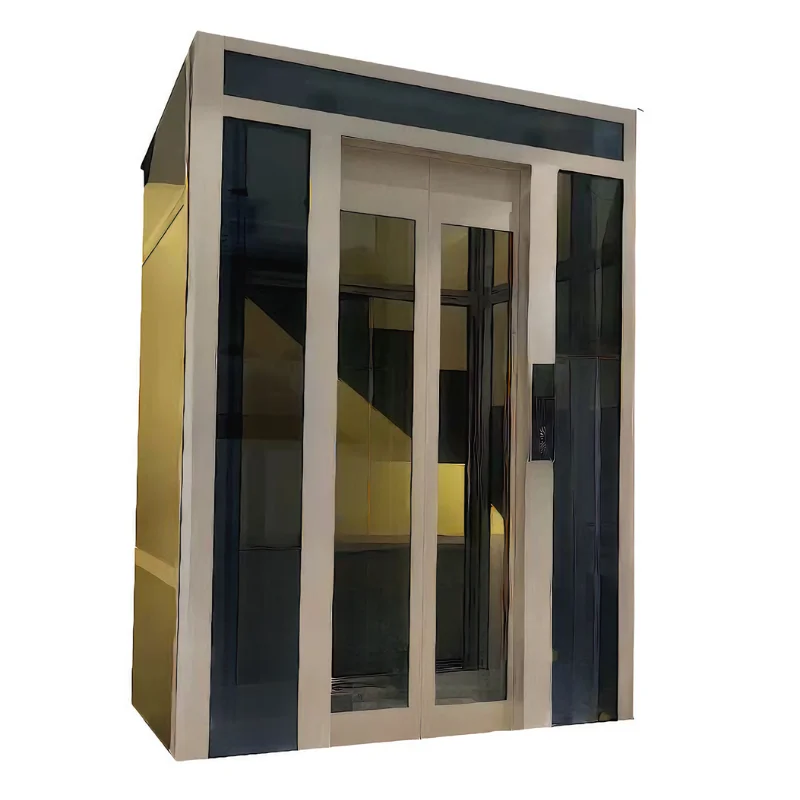
Smart home elevators are changing the way homeowners think about convenience, accessibility, and daily living.
As modern homes become more connected, the elevator is no longer just a transportation device between floors.
It has become an intelligent home mobility solution that improves comfort, safety, efficiency, and long-term property value.
For households seeking a better living experience, a smart home elevator can deliver a more seamless, personalized, and future-ready way to move throughout the home.
This guide explores how smart home elevators improve user experience, what features make them different from traditional Residential Elevators,
and why they are becoming a preferred choice in multi-level homes. It is designed as SEO-friendly, original, industry-focused content
that can be used directly in a blog post, directory page, landing page, or industry information page.
A smart home elevator is a residential elevator equipped with digital controls, automation functions, safety sensors,
connectivity options, and user-centric technologies that improve operation and convenience.
Unlike conventional home elevators that focus mainly on vertical movement, smart home elevators emphasize experience,
accessibility, monitoring, personalization, and integration with the broader smart home ecosystem.
In simple terms, a smart home elevator is designed to do more than move passengers from one floor to another.
It can respond to user preferences, support remote diagnostics, provide smoother operation, and enhance everyday usability.
These features help create a more modern home environment and a better overall user experience.
In the residential market, user experience is a major factor in buyer satisfaction.
Homeowners expect solutions that are easy to use, safe, quiet, visually appealing, and adaptable to their lifestyle.
A home elevator is used frequently by family members, children, older adults, and visitors, so usability matters at every stage.
A positive user experience in a home elevator includes simple controls, reliable performance, low noise, comfortable ride quality,
accessibility for people of different ages and mobility levels, and minimal maintenance interruptions.
Smart technology strengthens all of these elements, making the elevator more intuitive and more enjoyable to use.
Smart home elevators improve user experience through a combination of automation, safety, convenience, customization, and connectivity.
Instead of offering only basic floor-to-floor transportation, they provide a more polished and intelligent interaction for homeowners.
Below are the most important ways they enhance daily living.
One of the biggest advantages of a smart home elevator is its ease of use.
Smart interfaces often include touch controls, simple call buttons, clear floor indicators, and user-friendly displays.
Some systems may also support app-based controls or voice-enabled interaction, depending on the configuration.
This makes the elevator easier to use for all household members, including older adults and guests who may not be familiar with the system.
A clear and intuitive interface reduces confusion and creates a more comfortable experience.
Smart home elevators are especially valuable in accessible home design.
They support homeowners who want to age in place, manage mobility challenges, or simply make the entire home easier to navigate.
With level access, smooth acceleration, and thoughtful control placement, the elevator becomes more inclusive.
Accessibility is not only about disability support.
It is also about convenience for people carrying laundry, groceries, luggage, or children.
A smart elevator improves the experience for everyone in the home by reducing physical effort and making movement between floors easier.
Safety is one of the most important components of user experience.
Smart home elevators often include advanced safety technologies such as obstruction detection, emergency stop functions, backup power options,
door interlocks, overload protection, and automatic fault alerts.
These features create confidence and peace of mind for users.
When a system is designed to detect issues early and respond safely, the overall experience becomes more reassuring and dependable.
Families benefit from knowing that the elevator is built to reduce risks during everyday use.
Comfort is a major part of user experience, and smart home elevators are often engineered for smoother starts, softer stops, and low-noise operation.
This creates a more pleasant ride, especially in homes where the elevator is used multiple times per day.
Quiet performance is particularly important in residential settings because it preserves the calm atmosphere of the home.
A smooth and quiet elevator feels more premium, more refined, and more integrated into daily life.
Smart home elevators often allow customization of user settings, lighting, interior design choices, floor access behavior,
and operating preferences.
This personalization makes the elevator feel like a natural part of the home rather than a generic machine.
For example, homeowners may prefer specific lighting levels, interior finishes, call button layouts, or access settings.
The ability to adapt the elevator to household needs improves comfort and gives the user a greater sense of ownership and control.
Many smart home elevators can integrate with broader home automation systems.
This may include digital home networks, app-based monitoring, voice assistants, lighting systems, or security platforms.
Integration makes the elevator part of a connected living environment.
When the elevator works in harmony with other smart home devices, homeowners enjoy a more seamless lifestyle.
For example, a connected system may coordinate access, lighting, and security in a way that simplifies daily movement throughout the home.
Smart home elevators often support remote monitoring and diagnostic functions.
This means potential issues can be identified faster, and maintenance needs can be tracked more efficiently.
For homeowners, this translates into fewer unexpected interruptions and greater confidence in the system.
Remote diagnostics improve user experience by helping maintain reliable performance.
Instead of waiting for a problem to become serious, the elevator can be monitored proactively, which reduces stress and supports long-term satisfaction.
Some smart home elevators are designed with energy-efficient systems, standby modes, LED lighting, and optimized motor performance.
While the exact specifications vary by model and configuration, efficiency is an important part of the user experience because it helps support modern sustainability goals.
Energy-conscious design also contributes to lower operating impact and may support homeowners who want a more responsible residential mobility solution.
In a smart home environment, efficiency is often valued as much as convenience.
A smart home elevator can improve the visual and lifestyle appeal of a home.
Many residential elevators are designed to blend with modern interiors, use premium materials, and offer elegant design options.
This enhances the overall feeling of quality in the home.
In addition to day-to-day comfort, the presence of a smart elevator can improve the property’s perceived value.
Buyers often associate smart mobility solutions with future readiness, accessibility, and high-end living.
That makes the user experience not only practical, but also aspirational.
Different elevator systems vary in design and functionality, but several core features are commonly associated with smart home elevators.
These features help shape a more user-friendly, reliable, and modern experience.
| Feature | User Experience Benefit | Typical Residential Value |
|---|---|---|
| Touchscreen or digital controls | Simple, intuitive operation | Easy daily use for all ages |
| Smartphone connectivity | Convenient remote access and monitoring | Improved control and flexibility |
| Voice control compatibility | Hands-free interaction | Greater convenience and accessibility |
| Safety sensors | Reduced risk and automatic protection | Peace of mind for families |
| Quiet motor systems | Smoother and more comfortable ride | Better fit for residential environments |
| LED lighting | Clear visibility and energy awareness | Modern appearance and efficiency |
| Remote diagnostics | Faster issue detection and maintenance planning | More dependable performance |
| Personalized interior options | Custom look and feel | Stronger home integration |
| Backup power support | Continued operation during outages | Higher reliability |
| Access control settings | More secure and controlled usage | Better household management |
The following table provides a general industry overview of common smart home elevator specifications.
Exact specifications depend on building layout, local codes, manufacturer design, and project requirements.
This table is intended for informational use only and does not refer to any specific brand or model.
| Specification Category | Common Residential Range or Option | Impact on User Experience |
|---|---|---|
| Capacity | 2 to 6 persons, depending on design | Affects comfort and practical daily use |
| Number of stops | 2 to 6+ floors | Improves circulation in multi-level homes |
| Drive system | Hydraulic, traction, winding drum, or other residential systems | Influences ride smoothness, space use, and performance |
| Controls | Buttons, touchscreen, app integration, voice-compatible options | Makes operation easier and more modern |
| Safety systems | Door sensors, emergency communication, overload detection, backup lowering | Improves trust and daily confidence |
| Cabin lighting | LED, ambient, adjustable brightness | Enhances visibility and comfort |
| Noise level | Low-noise or quiet residential operation | Supports a more peaceful home environment |
| Connectivity | Wi-Fi, app-based monitoring, home automation integration | Creates a smarter and more responsive system |
| Interior design | Custom panels, finishes, mirrors, flooring options | Improves visual appeal and personalization |
| Power features | Energy-saving mode, emergency backup, soft-start technology | Supports reliability and efficiency |
A smart home elevator usually offers a more advanced user experience than a traditional residential elevator.
The difference is not only in technology, but also in how the system feels, responds, and fits into daily life.
The table below highlights the major distinctions.
| Aspect | Smart Home Elevator | Traditional Home Elevator |
|---|---|---|
| User interface | Digital, intuitive, often customizable | Basic buttons and standard controls |
| Connectivity | Supports smart home integration and monitoring | Limited or no connectivity |
| Maintenance insight | Remote diagnostics and proactive alerts | Usually reactive maintenance only |
| Accessibility | Enhanced options for mixed user needs | Functional, but less adaptive |
| Ride comfort | Smoother and quieter operation | May be functional but less refined |
| Customization | More personalized interiors and settings | Limited personalization |
| Safety awareness | Advanced sensors and status alerts | Standard safety protections |
| Daily experience | More seamless, modern, and convenient | Reliable, but simpler experience |
Smart home elevators are useful for a wide range of households. While they are often associated with luxury homes,
their real value extends far beyond appearance. They can improve comfort and usability for families, seniors,
people with mobility limitations, and homeowners planning for the future.
The advantages of smart home elevators can be grouped into several major benefit areas.
These benefits help explain why the technology continues to grow in popularity across residential markets.
| Benefit Area | Description | User Experience Result |
|---|---|---|
| Convenience | Easy movement between floors and simple controls | Less effort in daily routines |
| Accessibility | Supports users of different ages and abilities | More inclusive home environment |
| Safety | Advanced sensors and protection systems | Greater confidence and reassurance |
| Comfort | Smooth and quiet operation | More pleasant ride experience |
| Technology | Connected features and automation | Modern and responsive use |
| Efficiency | Energy-aware design and optimized operation | Better long-term performance |
| Aesthetics | Premium design and interior options | Improved home appearance |
| Reliability | Diagnostics and monitoring support | Fewer disruptions and better uptime |
For websites targeting residential mobility, accessibility, or smart home improvement topics,
smart home elevator content can perform well because it matches strong buyer intent and informational search intent.
Users often search for terms related to home elevator benefits, smart elevator features, residential accessibility,
aging in place, and modern home technology.
From an SEO perspective, this topic is valuable because it supports a wide range of related keywords and semantically connected terms.
These may include smart home elevator, residential elevator, home mobility solution, accessibility upgrade, home automation,
quiet elevator, Luxury Home Elevator, elderly-friendly home, and future-proof home design.
Content that covers these themes comprehensively can help search engines understand page relevance and topical authority.
If you are building an industry page, directory page, or blog article, the following keyword themes can help support search visibility
while keeping the content natural and readable. Use them in headings, body text, image alt text, and internal links where relevant.
| Primary Keyword Theme | Supporting Terms | Search Intent |
|---|---|---|
| smart home elevators | residential elevator, connected elevator, intelligent home elevator | Informational and commercial investigation |
| home elevator benefits | accessibility, convenience, comfort, safety | Informational |
| residential accessibility solutions | aging in place, mobility support, barrier-free design | Problem-solving intent |
| smart home technology | automation, connected devices, digital control | Informational |
| Quiet Home Elevator | smooth ride, low noise, comfort | Comparative and product research |
| future-ready home design | universal design, premium living, long-term planning | Inspirational and planning intent |
When homeowners evaluate smart home elevators, they often focus on a set of practical experience factors.
These factors directly influence how satisfying the elevator will be in everyday use.
Smart home elevators support many everyday scenarios. Their value becomes clearer when viewed as part of a practical home routine.
| Use Case | How the Smart Elevator Helps | User Experience Advantage |
|---|---|---|
| Moving between floors | Provides fast and easy vertical transport | Reduces effort and saves time |
| Carrying groceries | Eliminates stair climbing with heavy bags | More convenience and comfort |
| Aging in place | Maintains independence over time | Supports long-term living goals |
| Guest access | Offers an easy and welcoming mobility option | Improved hospitality and usability |
| Transporting laundry or luggage | Simplifies daily household tasks | Less physical strain |
| Mobility support | Helps users with limited stair use | Greater independence and safety |
Homeowners often think about elevators in terms of installation cost, but user experience should be considered just as important.
A smart home elevator can improve everyday living for many years by making the home more functional, more accessible,
and more enjoyable for all occupants.
In the long term, the value of a smart elevator comes from its combination of convenience, safety, comfort, and adaptability.
It helps a home remain usable as family needs change, and it supports a better quality of life without requiring major lifestyle adjustments.
This future-ready quality is one of the reasons smart home elevators are increasingly associated with modern residential design.
Smart home elevators improve user experience by making residential vertical transportation easier, safer, quieter, smarter, and more adaptable.
They support accessibility, integrate with modern home systems, and provide a more refined daily experience for homeowners and guests alike.
With features such as intuitive controls, remote monitoring, personalized design, and enhanced safety systems,
smart home elevators represent a major step forward in residential mobility.
For websites focused on home improvement, accessibility, architecture, smart living, or residential technology,
this topic offers strong SEO potential because it addresses both practical user needs and high-intent search behavior.
As homes continue to evolve, the smart home elevator will remain an important solution for better living, better access,
and a better overall user experience.
Gumagamit ang website na ito ng cookies upang matiyak na makukuha mo ang pinakamahusay na karanasan sa aming website.
 English
 ไทย
ไทย Indonesia
 Tiếng Việt



 Telepono
Magkomento
(0)